Look, the whole industry's buzzing about smart materials now. Self-healing concrete, phase-change polymers… sounds fancy, right? But honestly, after years on these sites, I've seen a lot of "innovation" that just doesn't hold up to a good rainstorm. Everyone’s chasing the next big thing, forgetting the basics. You spend all this money on a self-healing crack, but if your foundation isn't level, you're still screwed.
And the designs… oh, the designs. Architects come up with these things on their computers, all sleek lines and impossible angles. Have you noticed how many drawings don't account for how something is actually built? They specify a 3mm tolerance on a beam that's gotta be hoisted 50 stories high. It’s just… optimistic. I encountered this at a factory in Jiangsu last time, they were trying to push a design that required welding two ridiculously thin sheets of steel together. Said it looked good in the simulation. I just stared at the engineer.
We mostly work with a high-grade 6061 aluminum for the frames, you know, the stuff that doesn't immediately bend if you look at it wrong. It’s got a slight metallic smell, nothing overpowering, and feels solid. Good stuff. The panels themselves, though… that’s where it gets interesting. We’ve been using a lot of polycarbonate lately, mainly because it’s durable and fairly lightweight. Feels a little oily to the touch when it’s new, but it wears in nicely. It's not glass, obviously, but it's a good compromise.
The State of the Art in Mug Printing Same Day
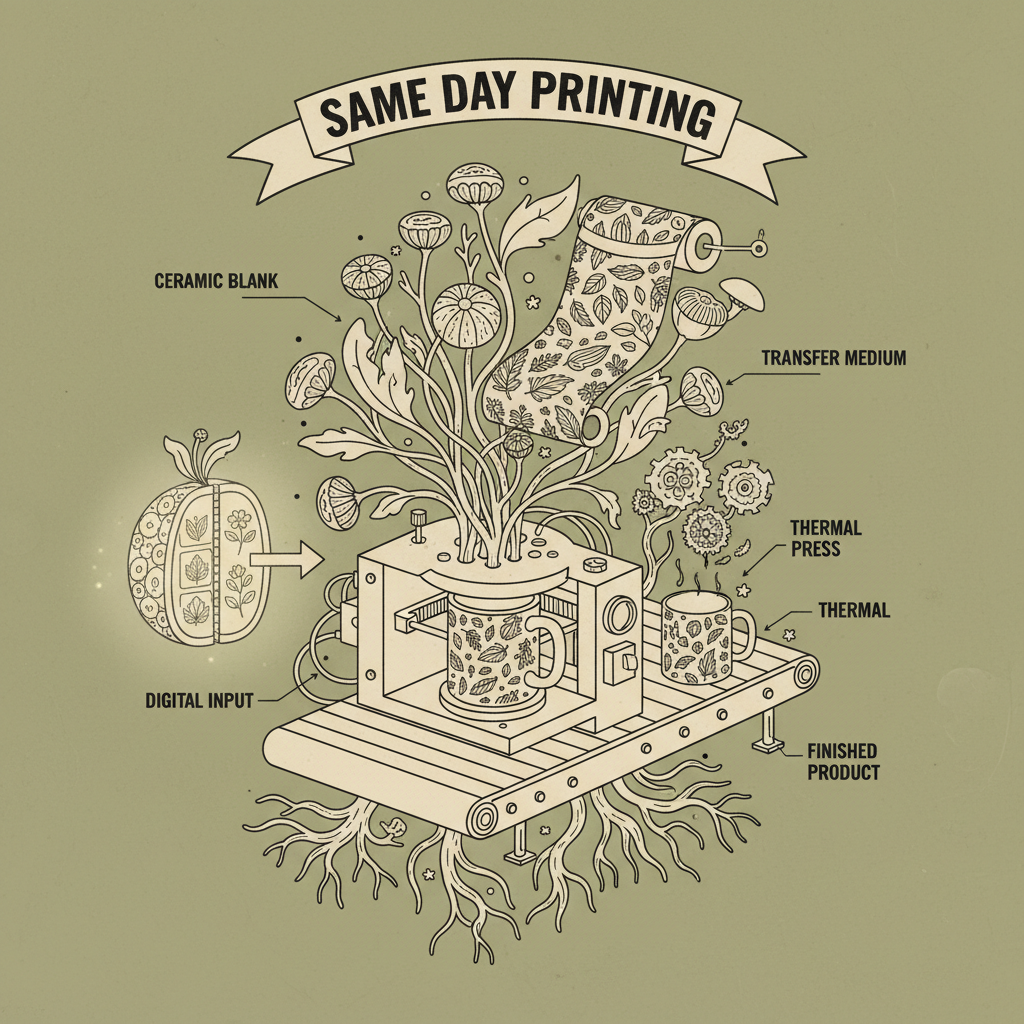
Honestly, the biggest trend right now is speed. Everyone wants mug printing same day. It's not about better quality, it’s about how quickly you can get a product out the door. This is driving a lot of automation, obviously. But it's also pushing people to cut corners. Strangely, a lot of companies are focusing on the printing speed, but neglecting the pre- and post-processing. The design file’s perfect, the print looks beautiful... but then the mug gets chipped during packaging. It’s maddening.
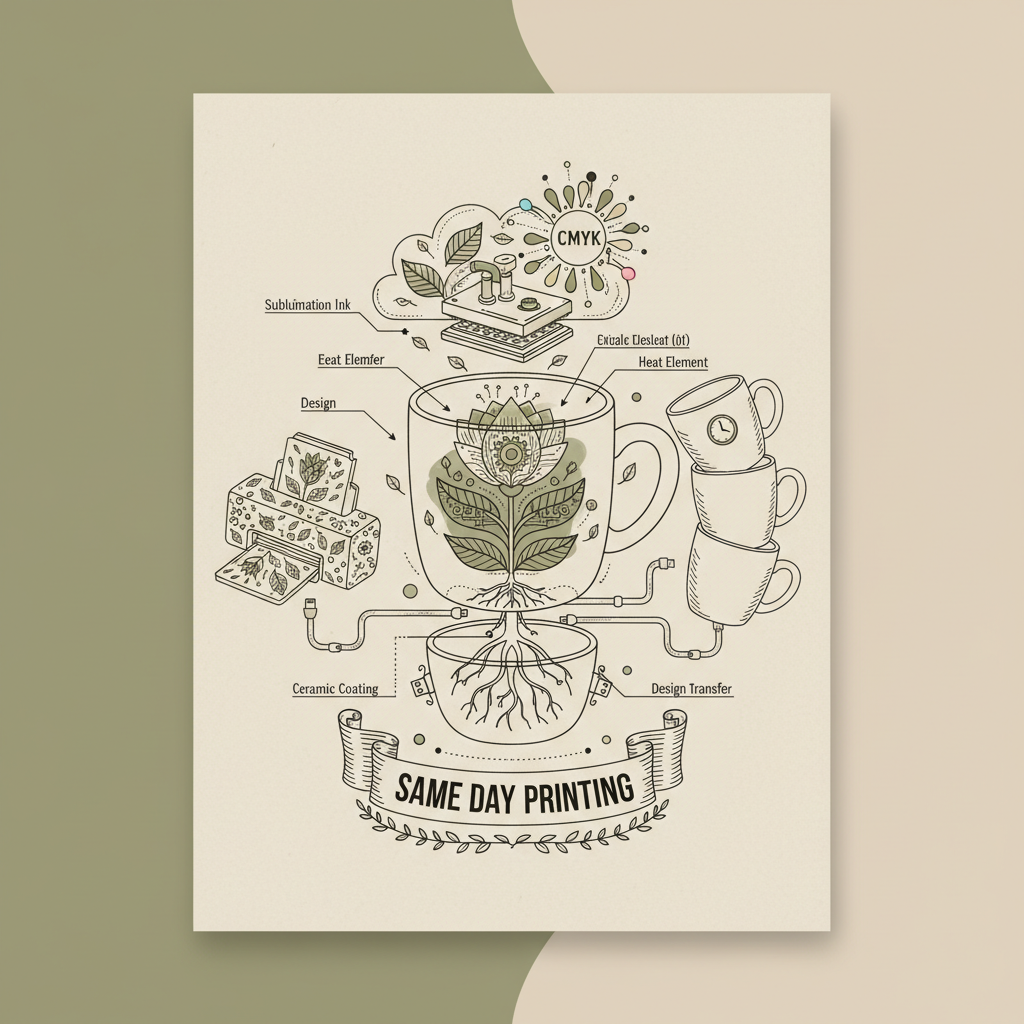
We’re seeing more sublimation inks with improved vibrancy, and a push for more environmentally friendly options. That's good, I guess. But even the “eco-friendly” inks sometimes smell…off. Anyway, I think the real innovation isn't in the ink itself, but in the pretreatment process. Getting the coating right is half the battle.
Design Pitfalls and Practical Considerations in Mug Printing Same Day
Look, you can design a beautiful mug, full of intricate details, but if it can’t handle a dishwasher cycle, it’s worthless. That’s a real problem we see a lot. People get carried away with the aesthetics and forget that these things are going to be used. Another thing is wrap distortion. It's a pain, right? You think you’ve got the artwork perfectly aligned, but the heat press shifts it just enough to make the image look wonky. It's a constant battle.
And don’t even get me started on gradients. Those always come out looking…muddy. It takes a lot of fine-tuning to get a smooth gradient on a curved surface.
We spend a lot of time educating clients about image resolution. They send us these low-res JPEGs, expecting a high-quality print. It’s like asking a painter to recreate the Mona Lisa with finger paints. It's just not going to happen.
Materials Spotlight: The Core Components of Mug Printing Same Day
The mugs themselves, obviously, are key. We use mostly ceramic, specifically a grade that’s rated for high temperatures and repeated washing. Feels… substantial, you know? Not that cheap, flimsy stuff. The coating is a polyester blend. It’s got a slight texture to it, which helps the ink adhere. It smells a little chemical-y when you first apply it, but that dissipates.
The inks, as I said, are constantly evolving. We’re using a lot of sublimation inks now, which means the image is actually infused into the ceramic, rather than just sitting on top. It makes the print more durable, but it also means you need a really good pretreatment process. And, you gotta be careful with the heat press settings. Too hot, and you’ll scorch the mug. Too cold, and the image won’t transfer properly.
The packaging materials are surprisingly important. You wouldn’t think so, but a broken mug is a very unhappy customer. We use custom-fit foam inserts to protect the mugs during shipping. It's an added cost, but it’s worth it to avoid the headaches.
Seriously, I once got a shipment of mugs that were all wrapped in newspaper. Newspaper! Can you believe that? It's a miracle any of them survived.
Real-World Testing & Performance of Mug Printing Same Day
We don’t rely on lab tests, not really. Sure, we check for color accuracy and wash durability, but the real test is just using the mugs ourselves. We run them through the dishwasher, drop them (accidentally, of course), and generally abuse them to see how they hold up. It’s brutal, but effective.
We also send samples to a few trusted clients and ask for their honest feedback. They’re the ones who are actually using the mugs day-to-day, so their input is invaluable.
Mug Printing Same Day Performance Metrics
User Behavior and Unexpected Applications of Mug Printing Same Day
You'd be surprised how people actually use these mugs. We thought most of them would be for coffee, but a lot of our customers use them for plants! Succulents, mostly. Apparently, the ceramic provides good drainage. Who knew?
Another thing we’ve seen is people using them as pen holders. Simple, but effective.
Advantages, Disadvantages, and Customization Options for Mug Printing Same Day
The biggest advantage, obviously, is the personalization. People love having a mug with their own photo or design on it. It's a unique gift. The quick turnaround is also a plus.
The downsides? The print quality isn’t always consistent, especially with complex designs. And the mugs can be fragile. I mean, they’re ceramic. What do you expect?
Customization is pretty flexible. We can do full-wrap designs, multiple colors, even add glitter (don't ask). Last month, a small boss in Shenzhen who makes smart home devices insisted on changing the interface to , and the result was a whole batch of mugs that couldn’t be used with standard chargers. He said it was “future-proof”. It was a disaster. We ended up having to reprint the entire order.
A Case Study: Navigating Client Requests in Mug Printing Same Day
We had a client who wanted to print a very detailed landscape photo on a mug. The photo was low-resolution and full of subtle gradients. I told him straight up it wasn't going to look good. He didn't listen.
He insisted. So, we did a test print, and as expected, it looked terrible. Muddy colors, blurry details… a complete mess. I showed it to him, and he finally admitted it wasn't working. We ended up simplifying the design and using a higher-resolution image, and the final product looked fantastic. It's a constant negotiation, really.
You have to manage expectations, educate the client, and sometimes just tell them “no.” It’s not always easy, but it’s necessary.
A Rough Summary of Mug Printing Same Day Quality Control
| Test Category |
Testing Method |
Acceptance Criteria |
Potential Issues |
| Print Quality |
Visual Inspection & Color Comparison |
Color accuracy within 5% of target; No visible defects |
Faded colors, banding, blurry images |
| Dishwasher Durability |
Run through 50 dishwasher cycles |
No fading, chipping, or peeling of the print |
Print washes off, ceramic cracks |
| Drop Test |
Drop from 1 meter onto concrete |
No cracks or shattering |
Ceramic breaks, handle detaches |
| Heat Resistance |
Fill with boiling water & let sit for 1 hour |
No cracking, discoloration or leaching |
Cracking, discoloration, release of chemicals |
| Image Adhesion |
Tape test & scratch test |
Print does not lift or scratch off easily |
Print peels or scratches off easily |
| Surface Finish |
Tactile inspection |
Smooth, even coating with no imperfections |
Rough texture, uneven coating, bubbles |
FAQS
Honestly, it depends on the complexity of the design and our current workload. But generally, for simple designs, we can usually get them done within 24-48 hours. If it's a large order or a particularly intricate design, it might take a little longer. We try to be realistic with our promises. It's better to under-promise and over-deliver, you know?
We prefer high-resolution PNG or JPEG files. Vector files (like AI or EPS) are great too, especially for logos and text. The higher the resolution, the better the print quality. Avoid sending us low-res screenshots – they just don’t translate well. We also have a template available on our website that you can use to ensure your artwork is properly sized and formatted.
Yes, most of our mugs are both dishwasher and microwave safe. However, we recommend hand washing to prolong the life of the print, especially for mugs with delicate designs. Over time, repeated dishwasher cycles can cause the print to fade slightly. And avoid using abrasive cleaners – they can scratch the surface.
Absolutely! We encourage you to order a sample. It’s the best way to see the print quality and make sure you’re happy with the results. We offer discounted sample pricing, and we’ll even waive the shipping fee on orders over a certain amount. It’s a small investment that can save you a lot of headaches down the road.
We recommend a resolution of at least 300 DPI (dots per inch) for the best print quality. The larger the image, the better. We’ve seen too many mugs come back looking blurry because the artwork was too low-resolution. It's a pain for everyone involved. So, take the time to make sure your artwork is up to snuff, alright?
We do! We have a team of designers who can help you create a custom design from scratch. We can work with your existing logo, photos, or ideas. We’ll provide you with a proof before printing, so you can make sure you’re happy with the final result. Just be prepared to pay a bit extra for the design services.
Conclusion
So, where does all this leave us? Mug printing same day is a competitive market, driven by the demand for personalization and quick turnaround times. It’s a constant balancing act between quality, cost, and speed. You can throw all the fancy technology at it you want, but at the end of the day, it comes down to the basics: good materials, careful craftsmanship, and realistic expectations.
Ultimately, whether this thing works or not, the worker will know the moment he tightens the screw. And if he doesn’t like what he sees, well, that’s when you know you’ve got a problem. You can visit our website at thegeniusgifts.com for more information.