The global promotional product market is witnessing a significant shift toward tactile, high-utility items that serve as long-term brand anchors. Among these, custom souvenir cups have emerged as a primary vehicle for cultural and corporate storytelling, moving beyond simple beverage containers to become curated experience pieces.
The challenge for procurement officers and event planners lies in balancing material durability with aesthetic precision. As consumer preferences shift toward sustainability and high-fidelity design, the technical requirements for craftsmanship—ranging from mold accuracy to the chemical stability of finishes—have become critical factors in determining the perceived value of the promotional item.
This analysis examines the current manufacturing paradigms of customized drinkware, focusing on the intersection of material science and brand identity. We will explore how specific production workflows and material selections impact the longevity and impact of corporate merchandise in competitive markets.


Producing custom souvenir cups requires a rigorous sequence of design validation. The process begins with a design draft, which may be provided by the client or developed by senior designers, followed by a critical selection of craftsmanship techniques.
The transition from 2D design to a physical mold is where the most significant engineering risks occur. Creating a mold sample, adjusting it for structural integrity, and confirming a final bulk sample ensures that the three-dimensional realization matches the brand's visual identity without compromising the vessel's functionality.
Material choice dictates the end-user's experience and the product's lifespan. For high-end souvenirs, materials like metal and resin are preferred for their weight and perceived value, while PVC and silicone are utilized for flexibility and impact resistance. Each material interacts differently with branding techniques, requiring specific surface treatments to ensure adhesion.
The trade-off between leather and metal accents often depends on the desired "feel" of the product. Leather provides a premium, organic touch, whereas metal conveys industrial precision and durability. Engineering these combinations requires an understanding of thermal expansion and chemical bonding to prevent delamination over time.
Plush and silicone elements are increasingly integrated into souvenir sets to add a sensory dimension. The challenge here is maintaining hygiene standards and material stability under varying environmental conditions, making the selection of qualitative, high-grade materials a non-negotiable requirement for professional-grade merchandise.
The visual impact of a souvenir cup is determined by the craftsmanship applied to the surface. Techniques such as imitation enamel and baking finishes are employed to create vibrant, long-lasting colors that resist fading and scratching.
Integrating these techniques requires strict adherence to a refining design cycle. By adjusting the mold sample and confirming bulk samples, manufacturers can ensure that intricate details—such as fine-line etching or multi-color printing—are replicated consistently across thousands of units.
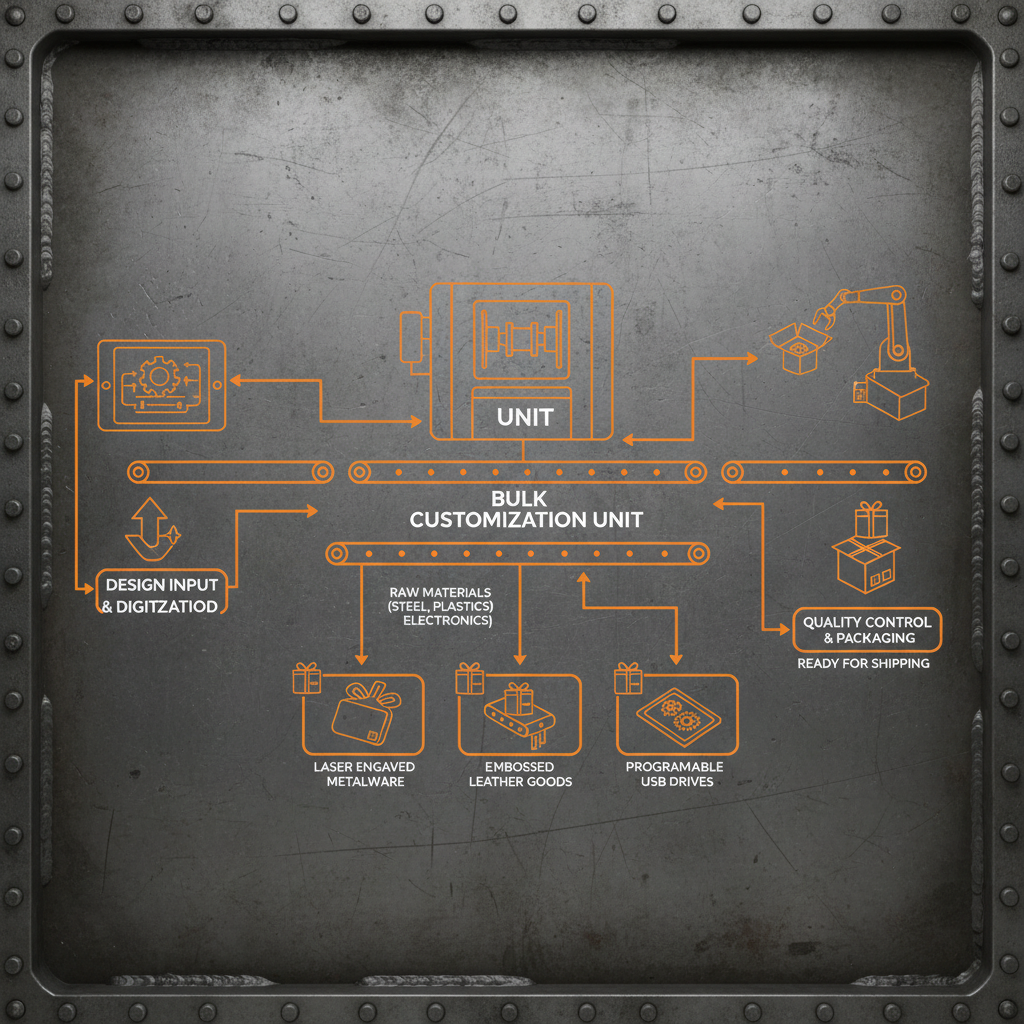
Operational efficiency in the gift manufacturing sector is measured by the speed of the "Design-to-Delivery" cycle. The ability to accelerate delivery through efficient processes is a key competitive advantage, especially for urgent event-based needs.
The following assessment illustrates the relative engineering ratings for different production stages, highlighting where the most critical quality control checks are situated in the workflow.
From a buyer's perspective, custom souvenir cups are not standalone products but components of a larger brand ecosystem. They are often integrated into welcome kits or anniversary packages, requiring compatibility with other corporate merchandise like promotional bags or customized stationery sets.
The deployment scenario typically involves large-scale distribution to employees or clients globally. Consequently, the logistical stability of the product—such as its resistance to impact during shipping and its ability to maintain finish quality across different climates—is as important as the initial design.
The industry is moving toward hyper-personalization, where 3D design and custom molds allow for unique geometric shapes that break away from traditional cylindrical forms. This shift is driven by the need for "instagrammable" products that drive organic social media reach for the brands that distribute them.
Material innovation is also centering on the adoption of more sustainable yet durable polymers. The goal is to maintain the "premium" feel of resin and metal while reducing the environmental footprint of the manufacturing process.
Furthermore, the integration of functional accessories—such as bag hangers or specialized lanyards—is transforming the souvenir cup from a passive object into a versatile tool, increasing the "utility-to-brand" ratio for the end-user.
Selecting the right configuration for a promotional project requires an analysis of the target audience and the intended use case. A high-duty configuration is necessary for outdoor sports gifts, whereas a precision configuration is more appropriate for luxury corporate merchandise.
Buyers should evaluate the balance between the chosen craftsmanship and the budget, recognizing that certain techniques like die-casting offer higher longevity but require higher initial mold investments.
The following matrix provides a framework for matching product configurations with specific business objectives.
| Configuration Profile | Primary Material | Finishing Technique | Recommended Use Case |
|---|---|---|---|
| Basic Configuration | PVC / Silicone | Standard Printing | Mass Event Giveaways |
| Standard Configuration | Resin / Metal | Baking Finish | Employee Onboarding |
| High-Duty Configuration | Stainless Metal | Etching / Stamping | Outdoor & Sports Gifts |
| Precision Configuration | Premium Resin | Imitation Enamel | Executive Awards |
| Custom-Mold Profile | Mixed Media | 3D Die-Casting | Brand Mascot Products |
| Industry Baseline | Standard Polymer | Epoxy Coating | General Promotional Use |
Baking finish involves applying a pigment and curing it at high temperatures, resulting in a hard, integrated surface that is highly resistant to wear. Epoxy coating is a clear, resin-based layer applied over a design to provide a domed, glossy effect and an extra layer of protection against scratches. Baking is better for durability, while epoxy is superior for visual depth and gloss.
Consistency is achieved through the "confirming final bulk sample" stage of the workflow. By testing the design on various material substrates—such as metal versus silicone—and adjusting the printing or etching parameters, manufacturers ensure the color profile and line weights remain uniform across a diverse product range.
Yes, 3D custom molds require a higher initial investment because they involve the creation of a unique physical tool to shape the entire product. Simple logo customization typically uses existing standard molds and applies branding via printing or etching, which reduces the setup cost and shortens the lead time for production.
For outdoor applications, high-grade metal or UV-stabilized silicone are the most effective. Metal provides structural rigidity and temperature resistance, while treated silicone prevents degradation from sunlight exposure. When paired with etching or baking finishes, these materials ensure the souvenir remains intact in varying environments.
Yes, functionality can be expanded by integrating accessories such as phone lanyards, bag hangers, or customized lids. These are typically added during the final assembly stage or integrated into the mold design itself to ensure a seamless transition between the main body of the cup and the accessory.
Evaluate vendors based on their end-to-end workflow: specifically, their ability to provide a senior designer for draft refinement and their rigor in the "mold sample → adjust → confirm" cycle. A vendor who emphasizes sample validation over immediate bulk production is more likely to deliver a product that meets strict brand specifications.
The transition of custom souvenir cups from simple utilities to brand assets depends entirely on the precision of the manufacturing workflow. By prioritizing material science and rigorous sample validation, organizations can ensure that their promotional investments provide long-term value rather than short-term visibility.
Ultimately, the success of a customized gift program lies in the alignment of technical specifications with the desired emotional response of the recipient. For those seeking professional-grade execution, exploring comprehensive customization services via thegeniuscustomgifts.com ensures that design intent is translated accurately into a physical, high-impact product.